
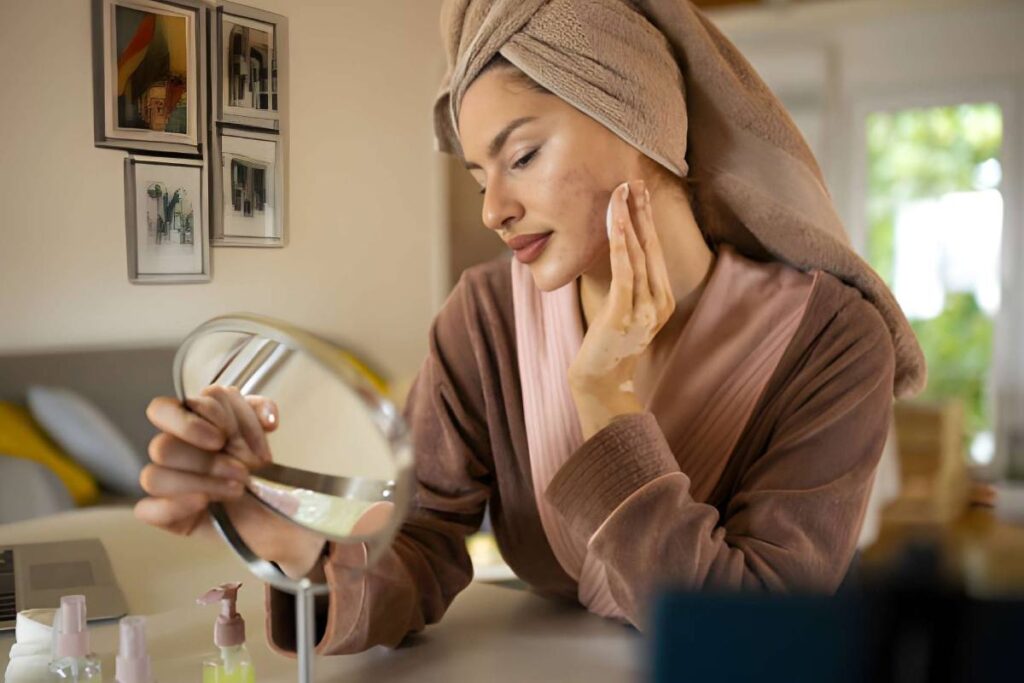
Acne scars can be very frustrating and challenging to treat, mainly after you’ve already dealt with the acne itself. While acne may eventually clear up on its own, the resulting scars can linger and negatively impact self-esteem. Luckily, there are several home remedies you can use to reduce the appearance of acne scars. While these remedies require time and patience, they are gentle on the skin and encourage healing without harsh chemicals.
In this guide, we’ll explore several effective methods to help you quickly and naturally reduce the appearance of acne scars at home, using ingredients you likely already have in your kitchen. Let’s get started!
What Causes Acne Scars?
Before discussing treatment methods, it’s essential to understand what causes acne scars. These scars form when skin tissue is damaged by severe acne, inflammation, or the scratching of affected areas. During the therapeutic process, the skin produces collagen; if too much or too little is produced, scars form. Nearby are two main types of acne scars:
- Atrophic scars: These are indentations or depressions in the skin, usually associated with severe cystic acne.
- Hypertrophic scars: raised marks that form due to extreme collagen production during the healing process.
How to Get Rid of Spots and Scars Naturally at Home
While professional procedures such as laser therapy, chemical peels, or microneedling can effectively reduce acne scars, natural remedies offer a calmer and more affordable alternative. Here are some of the most popular and effective ways to treat spots and blemishes at home.
1. Aloe Vera
Why the mechanism: Aloe vera is known for its soothing and healing properties. It contains antioxidants and anti-inflammatory materials that help reduce scar tissue and promote skin regeneration.
How to use:
- Extract fresh aloe vera gel from the spray and apply it directly to the scars.
- Leave it on for 30 minutes and rinse with warm water.
- For best results, repeat the procedure twice a day.
Tip: Aloe vera is safe for all skin types and helps with both active acne and scars, making it an excellent all-purpose remedy.
2. Lemon Juice
Why it works: Lemon liquor acts as a normal bleaching agent, helping lighten dark scars and hyperpigmentation. It also stimulates collagen production, contributing to skin rejuvenation.
Instructions for usage:
- Consume fresh lemon juice and apply it directly to the scars with a cotton pad.
- Leave it on for 10-15 minutes and rinse with cold water.
- Afterwards, apply a moisturising cream, as lemon juice can dry out the skin.
Caution: Lemon juice can increase your skin’s sensitivity to the sun, so always use sunscreen if you’ll be in the sun.
3. Honey
Why it works: Dear is a natural moisturiser with powerful antibacterial properties. It endorses tissue regeneration and reduces inflammation, which can help lighten scars over time.
How to use:
- Apply raw honey directly to the scars.
- Leave it on overnight and wash it off in the morning.
- For best results, use daily.
Tip: To enhance the anti-inflammatory effect, mix honey with cinnamon or turmeric.
4. Coconut Oil
Why it works: Coconut oil is rich hip vitamins and antioxidants, especially vitamin E, which promotes skin healing and regeneration. It also provides deep hydration, which is essential for lightening scars.
How to use:
- Warm a small amount of unrefined coconut oil in your hands and gently rub it into the scars.
- Leave it on overnight and wash it off in the morning.
- Repeat daily for soft and nourished skin.
5. Baking Soda
Why it works: Boiling soda acts as a gentle exfoliant, removing dead skin cells and balancing the skin’s pH. This process promotes skin regeneration.
How to use:
- Mix one teaspoon of boiling soda with a few drops of water to form a paste.
- Apply the fixative to the scars and leave it on for 5-10 minutes.
- Rinse with water, then apply a moisturiser.
- Use this remedy 2-3 times a week.
Caution: Baking soda can irritate sensitive skin, so it is recommended to test it on a small area first to avoid irritation.
6. Tea Tree Oil
Why it works: Tea tree oil is identified for its antibacterial and anti-inflammatory properties. It helps reduce redness, swelling, and scarring associated with acne.
How to use:
- Mix a few drips of tea tree oil with a transporter oil, such as coconut or jojoba oil.
- Apply the mixture to the scars with a cotton swab.
- Leave it on overnight and wash it off in the morning.
- Repeat daily until the condition improves.
Caution: Always thin tea tree oil before applying it to the skin to avoid irritation.
7. Apple Cider Vinegar
Why it works: Apple cider vinegar pieces act as a natural astringent and toner. It helps reduce the attendance of dark spots and acne scars by promoting skin renewal.
How to use:
- A mixture of equal portions of apple cider vinegar and water.
- Apply the answer to the scars with a cotton pad.
- Leave on for 10 minutes, then rinse off.
- Use daily for best results.
Tip: Always dilute apple cider vinegar to avoid skin irritation.
8. Vitamin E Oil
Why it works: Vitamin E is a prevailing antioxidant that promotes skin healing and reduces scar tissue. It helps repair damaged skin cells and improve skin texture.
How to use:
- Puncture a vitamin E lozenge and extract the oil.
- Gently massage the oil into the scars.
- Leave on overnight and wash off in the morning.
- Apply daily for visible improvements.
9. Turmeric
Why it works: Turmeric has powerful anti-inflammatory and antioxidant properties that help lighten dark spots and scars. It also evens out skin tone and fights free radicals that can damage the skin.
How to use:
- Mix turmeric powder with a small quantity of water or honey to make a paste.
- Smear the paste on the scars and leave it on for 15-20 minutes.
- Rinse off with water.
- For best results, use this remedy 3-4 times a week.
Read the article: 5 Best Natural Remedies for Removing Dark Spots from the Face
10. Cucumber
Why it works: Cucumber is incredibly soothing and moisturising for the skin. It contains vitamins A and C, which promote skin healing and regeneration, making it an effective remedy for reducing scars.
How to use:
- Share a fresh cucumber and place the slices directly onto the scars.
- Leave on for 20-30 minutes, then rinse off.
- You can also puree the cucumber into a paste and use it as a mask.
Tip: Cucumber is ideal for sensitive skin, as it has a gentle, refreshing effect.
Additional Tips for Fading Acne Scars Faster
In addition to these products, following a healthy skincare routine and developing good habits will help you see results faster.
- Be consistent: Regular application of natural remedies is key to improving skin condition.
- Use sunscreen daily: Sun exposure can darken scars and slow healing, so always use an SPF of at least 30 when outdoors.
- Gently exfoliate your skin: Exfoliating your skin a combination of times a week helps remove dead skin cells and promotes the growth of new skin.
- Drink sufficient water: Stay hydrated to keep your skin hydrated and support healing from within.
- Avoid touching the scars: Scratching or picking at scars can worsen their condition and lead to further damage.
Conclusion
Removing acne scars naturally requires patience and consistency, but with the right ingredients, you can achieve significant improvement in your skin’s appearance. Ingredients like aloe vera, honey, lemon juice, and coconut oil work gently on the skin, reducing inflammation, stimulating collagen production, and helping scars fade over time. While these natural treatments take time, they are safe, inexpensive, and easy to incorporate into your daily routine.
For severe or deep acne scars, you may need to consult a dermatologist for more intensive treatment. However, for mild to moderate scarring, these natural medicines can help you achieve clearer, healthier skin from the comfort of your home.